
Introduction
You may hesitate when you hear the term Photorealism in 3D Commercial Renderings and wonder if the extra effort truly elevates your project or merely adds cost and complexity.
Perhaps you have relied on standard render passes and basic textures, convincing yourself that your design speaks for itself. Yet many stakeholders struggle to see beyond flat imagery, leaving them unsure about materials, lighting, or spatial relationships.
At 3D Rendering World, we have guided architects, developers, and marketing teams through that same doubt and watched them transform flat concepts into living visions with our 3d rendering services.
We will explore how photorealism closes the imagination gap, delivers next-level impact for commercial projects, and changes the way clients decide.
You will walk away with clear strategies for achieving true photoreal renderings that sell design intent, drive approvals, and set your work apart.
In this article, we’ll examine the latest techniques for crafting next-level photorealistic 3D commercial renderings and explore why pursuing greater realism matters for commercial projects today.
Why Photorealism Matters in Commercial Renderings
In commercial projects you compete not just on design quality but on the confidence you instill in investors, tenants, and decision makers.
Generic 3D imagery can leave critical questions unanswered—Will the lobby feel welcoming at night? How will sunlight penetrate storefronts?
When images truly mimic reality you remove that uncertainty, turning questions into yes moments.
We recall a retail center pitch where printed boards and mood boards failed to win approval. After delivering a set of photoreal elevator lobby scenes that showed reflections on stone cladding and LED cove lighting in context, the committee responded with enthusiasm rather than hesitation.
Project approval followed within a week, proof that high-fidelity visuals accelerate commercial buy-in.
Core Elements of Photorealism
Achieving photorealism requires precision in three core areas: lighting, materials, and composition. First, lighting should mimic natural and artificial sources with correct intensity, color temperature, and shadow softness.
Next, materials must use physically based rendering (PBR) workflows that replicate real-world reflectance, roughness, and subsurface properties.
Finally, composition uses camera framing, focal length, and depth of field to guide the viewer’s eye.
In one office tower project, we spent 20 percent of our time fine-tuning window reflections and glare on glass facades. That effort transformed the difference between an acceptable mock-up and an image that clients mistook for a photograph.
When you nail these components, photorealism becomes seamless, immersive, and persuasive.
Next-Level Techniques For Pushing Photorealism Further
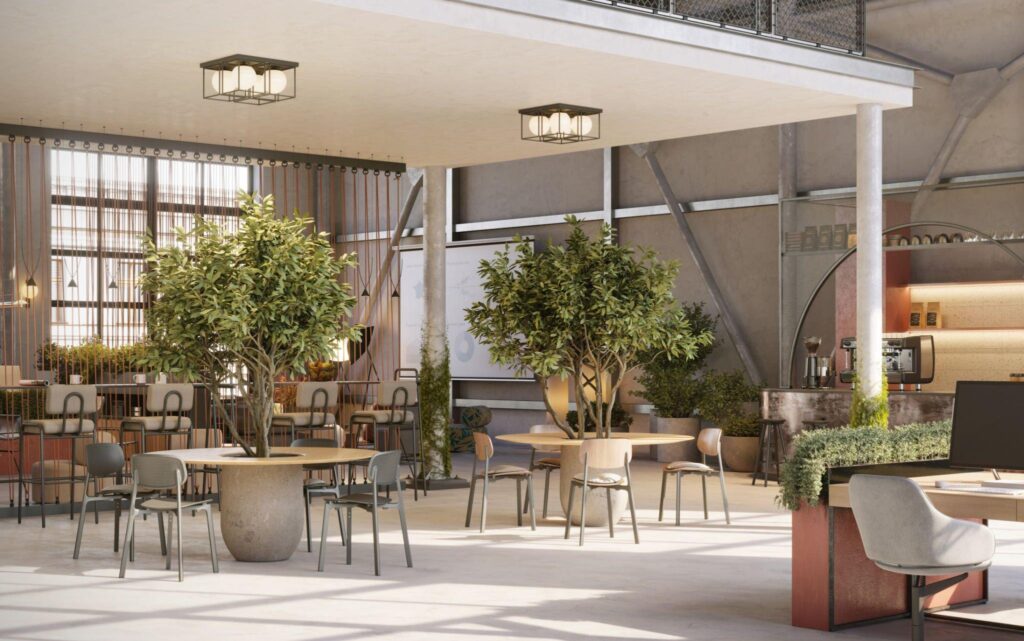
As rendering engines like Unreal 5 introduce unprecedented real-time rendering capabilities, 3D artists have found inspiration to advance photorealism even further in their architectural visualization work. Some of the prominent techniques leveraged today include:
1. Light Mixing for Realistic Materials
Carefully balancing multiple clear coats and subsurface scattering layers for materials like metal and plastic better simulate light diffusion as it interacts with surfaces. This avoids the “too perfect” look that can rupture photorealism, for more nuanced material definition.
2. Volumetric Light and Fog Effects
The latest tools allow artists to add true volume and atmospheric light effects like fog, dust and tangible light rays within 3D rendered environments. The results ground commercial spaces and underscore their realism via environmental storytelling.
3. 8K HDRI Reflections and Backplates
High-resolution 8K HDRI backgrounds better capture the complexity and continuity of reflective light sources within both interior and exterior commercial renderings. This seamless environmental illumination authenticates the 3D space.
4. AI-Assisted Content Creation

Emergent AI tools like autogenerative 3D modeling software and StyleGAN-powered texture generators produce incredibly realistic base content to be refined into 3D commercial renderings. This amplifies realism while improving 3D artists’ productivity.
Advanced Lighting Techniques for Commercial Spaces
Lighting makes or breaks photorealism in commercial renderings. You may think ambient lighting alone suffices, but accurate simulation of daylight, mixed color temperatures, and artificial fixtures matters most.
For exterior façades, we use HDR sky domes and physical sun systems that replicate solar position by time and location. For interiors, we place photometric lights that match manufacturer data for fixtures such as downlights and linear LEDs.
In one mixed-use lobby design, we created four lighting scenarios—morning, noon, dusk, and night—to show how retail windows and architectural highlights perform throughout a full day.
That breadth of visual information gave leasing agents talking points for prospective tenants and reduced on-site lighting revisions by 60 percent.
Use the Creative Potential of Photorealistic 3D
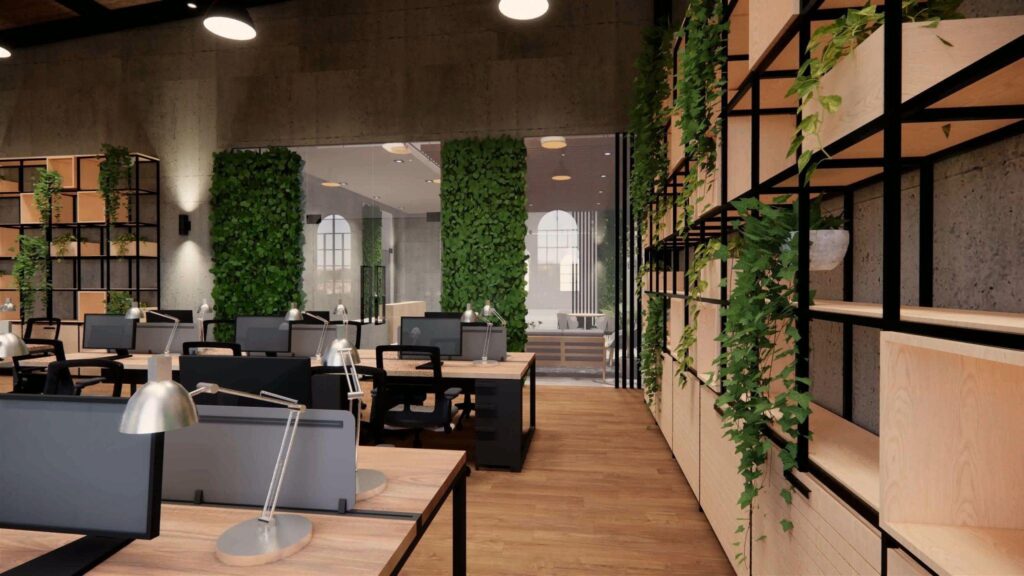
While prevailing attitudes have pigeonholed high-realism rendering as strictly utilitarian and literal, this ignores how photorealism unlocks greater creative possibility.
More realistic virtual lighting tools empower architects and 3D artists to craft beautifully cinematic renderings that convey mood, emotion and environmental narrative – expanding the purpose of 3D commercial visualizations.
Likewise, as library-driven parametric 3D design combines with photoreal rendering engines, architects can use realistic visualization to iteratively experiment with dramatically daring and provocative forms unbuildable via status quo construction techniques. Realistic rendering collapsed barriers to creativity.
Material and Texture Strategies
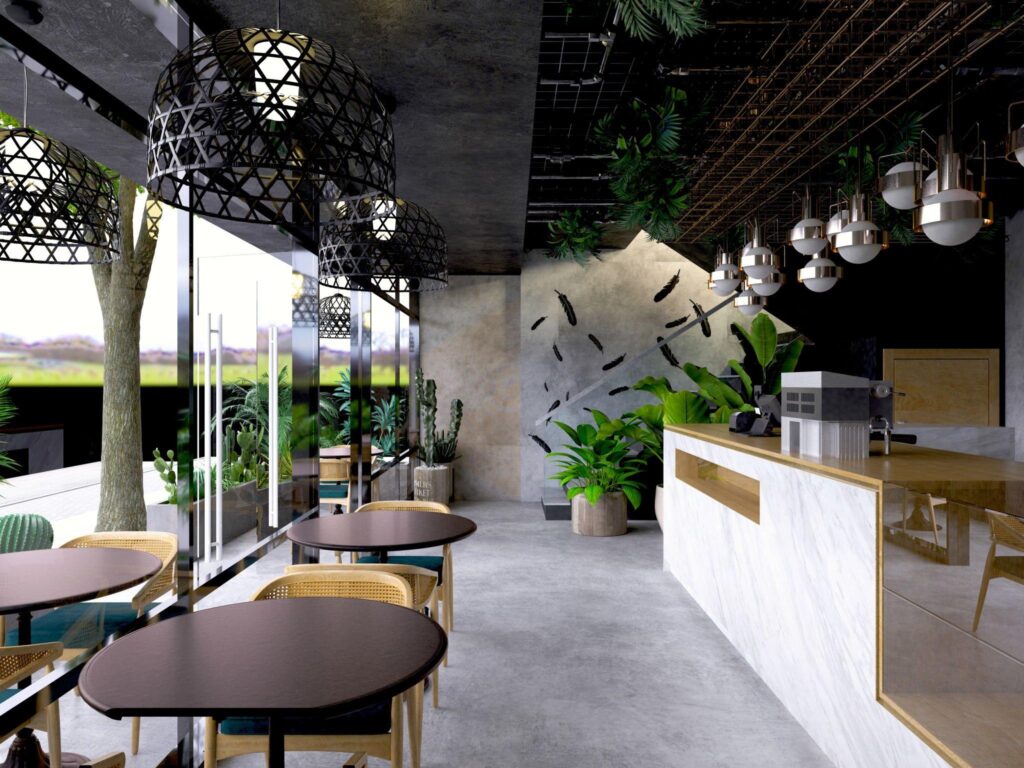
Realism hinges on materials that feel tangible. You might default to generic stone or wood shaders, yet authentic textures come from high-resolution scans of real samples.
We capture displacement maps for surface irregularities, roughness maps for accurate highlights, and albedo maps for color fidelity. Layering decals such as subtle dirt, wear, or logos—adds the final touch of realism.
For a hotel façade project, we scanned three different stone types and created custom PBR libraries. By swapping these textures across test renders we helped the client lock in a façade palette in just two design iterations.
That speed and precision are what photoreal material workflows deliver.
Integrating Photoreal Renderings into Commercial Workflows
To make photorealism a strategic asset, integrate it at key project milestones rather than as an afterthought. Start with concept-phase visuals to test massing, materials, and lighting direction.
Use mid-phase renderings to align stakeholders on finish palettes and corridor patterns. Finally, deliver high-resolution photoreal stills and panoramas for marketing brochures, leasing websites, and tenant onboarding kits.
Embedding these touchpoints into your project schedule creates clarity, reduces costly late-stage changes, and elevates your brand reputation with clients who see you as both creative and precise.
Measuring Impact and Client ROI
You may question how to quantify the value of photorealism. Our clients track metrics such as approval time, revision counts, and marketing engagement.
On average, projects using photoreal renderings experience a 30 percent faster approval cycle and a 25 percent reduction in design revisions. Marketing materials featuring photoreal visuals also see up to a 50 percent increase in click-through rates and lead inquiries.
| Metric | Measured Improvement | Client ROI |
|---|---|---|
| Approval Cycle Time | 30% faster approvals | Compresses project schedules by 2–4 weeks |
| Design Revisions | 25% fewer revision rounds | Saves 10–20 billable hours |
| Marketing Engagement | Up to 50% increase in click-through rates and lead inquiries | Drives higher qualified lead volume and conversions |
By translating these savings into cost and time metrics, you demonstrate clear ROI for investing in photorealism. Those figures resonate with commercial clients who demand both creativity and accountability.
The Best Is Just the Beginning
As tools like AI, real-time ray tracing, multi-camera VR visualization and cloud compute evolve, artists will unlock exponentially greater photorealism in 3D architectural renderings – along with expanded creative possibilities. Leading firms are investing now to prepare pipelines for even more visually impactful 3D interior rendering and 3D exterior rendering.
At 3D Rendering World, we blend industry-leading software, custom scripts, and proven CGI workflows to deliver photoreal commercial renderings that stand out in competitive markets.
By harnessing the techniques outlined here for next-level realism, architects, designers and visualization studios can immediately boost their 3D rendering portfolio quality to win clients and accelerate design immersion today.
Yet this is just early days – prepare for photorealism in 3D to continuously astonish from here forward!
Frequently Asked Questions
Use PBR materials, calibrated lighting, AI textures, and advanced rendering tools to simulate real-world light physics.
It enables better spatial evaluation to inform planning, gain stakeholder buy-in, and craft persuasive visual assets.
Real-time ray tracing, customizable material and asset libraries, dedicated render farms, VR/AR exports.
From days to weeks depending on asset complexity - new AI tools seek to boost efficiency.
No - increased realism grants more creative freedom for mood, storytelling and dramatic expressions.
Promote collaboration between architects and artists early on and invest in specialized rendering training.
Expect exponential leaps in real-time experiences, computing power, asset generation speed and accessible photorealism in years ahead.
Within the online 3D rendering portfolios of top visualization artists and architectural studios.